
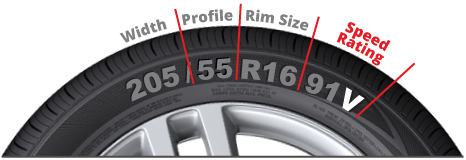
A speed rating is a letter printed at the end of a tyre size (e.g., 205/55 R16 91V).
It shows the maximum speed the tyre can safely handle when carrying its recommended load. A speed rating doesn’t mean the vehicle will be driven at that speed.
Instead, it indicates how well the tyre copes under pressure — including braking, cornering, and heat build‑up.
The speed rating of a tyre is displayed on the sidewall. You will find it at the end of the tyre's size. It is always represented by a letter - in the following example, the tyre speed rating is "V".
🔍 Why Speed Ratings Matter
- Help the tyre handle heat, pressure, and stress at speed.
- Affect braking, cornering, and overall stability.
- Must meet (or exceed) the vehicle manufacturer’s requirement.
Fitting a tyre with a lower rating than recommended can impact safety and insurance.
📏 Common Speed Ratings
🗣️ How to Explain to a Customer
“The speed rating is just a letter that tells us the top speed a tyre is built to handle safely.
You won’t necessarily drive at that speed — it’s more about how well the tyre performs under pressure, especially when braking or cornering.
As long as we match or go higher than your current rating, your car will stay safe and compliant.”
✔️ Key Rules
Never go below the manufacturer’s recommended rating.
Higher is fine — it can even improve handling.
Winter tyres may be allowed one step lower, but only if the manufacturer states it.
Always match the rating shown on the customer’s current tyres or OEM spec.
Can we ensure messaging consistent here, ie match or exceed?
👍 Quick Check
When helping a customer:
- Look at the letter at the end of their tyre size.
- Match or exceed it.
- If unsure, check the manufacturer's guide or ask a senior advisor.